LOLA NIKOLAOU
Art Gallery
We promote contemporary art in Thessaloniki in all its forms. We are creating a meeting place where established artists from Greece and abroad come together with the new generation of talented visual artists, offering the city’s public a continuous, innovative cultural experience.
Current Exhibition
Vasilis Zografos
Your Success Will Astonish Everyone
Opening Thursday 5th of November 2026, 18.00 – 21.30
.jpg.png)
SHORT TALKS ON PAINTINGS
Your Success Will Astonish Everyone
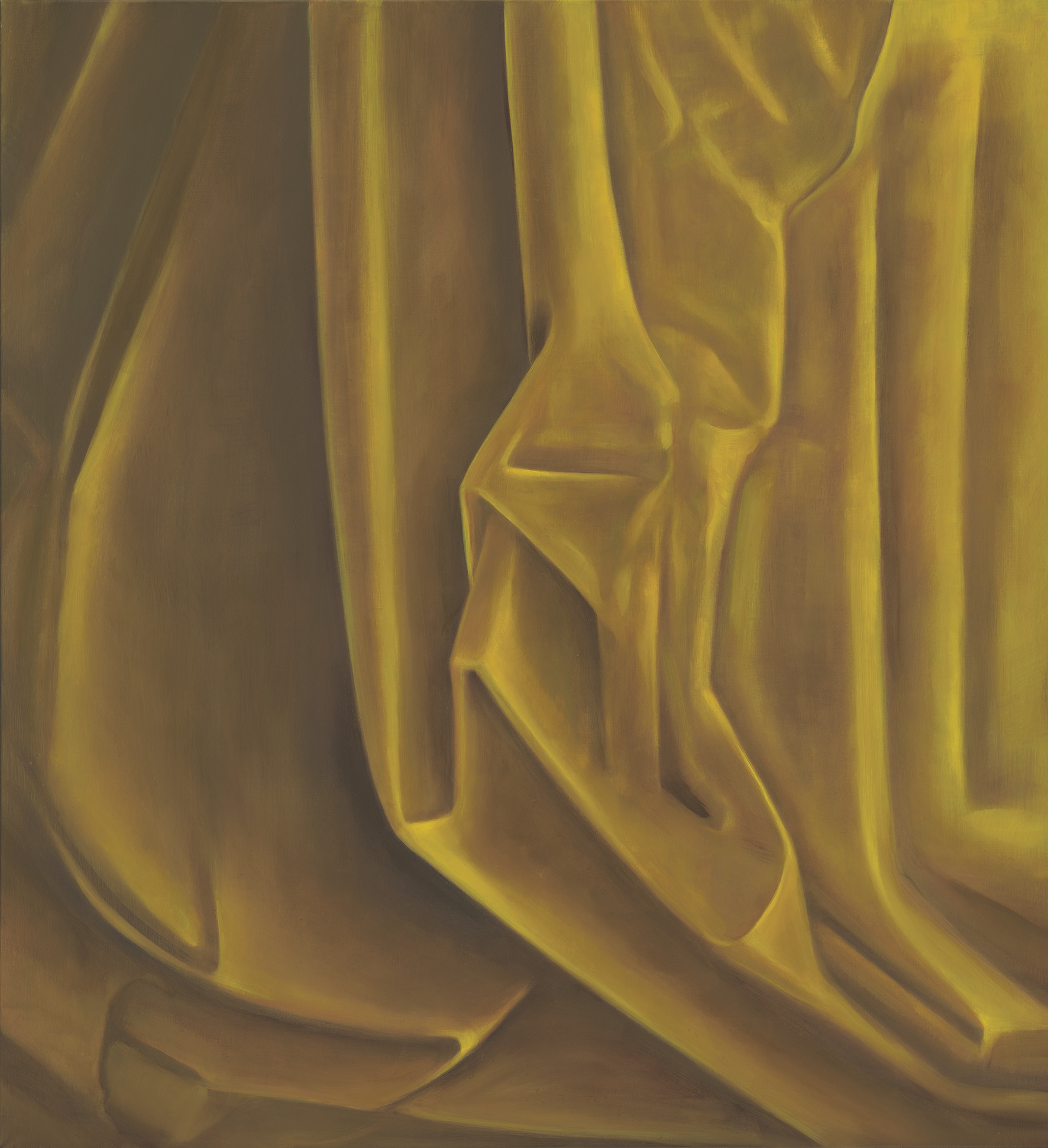
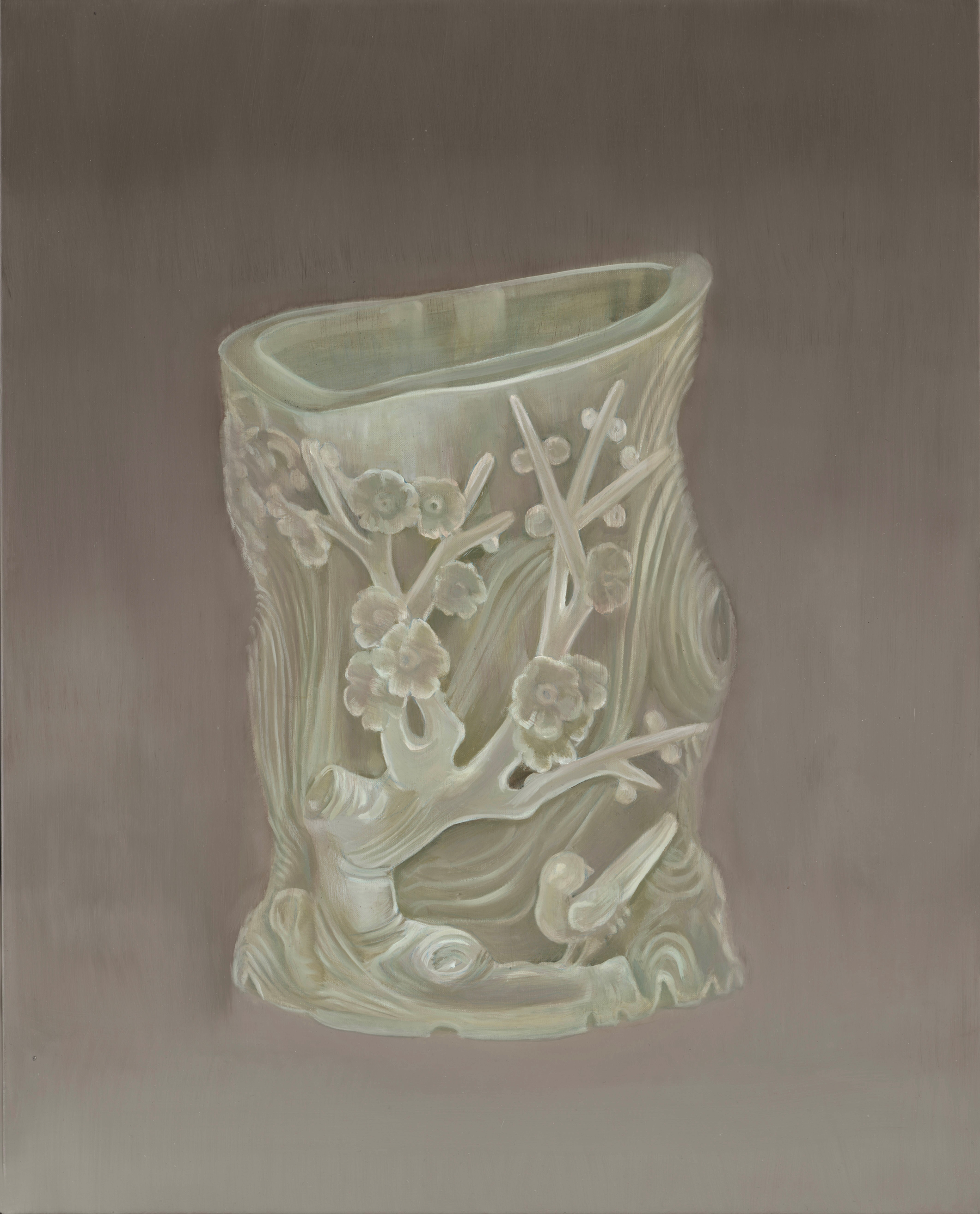
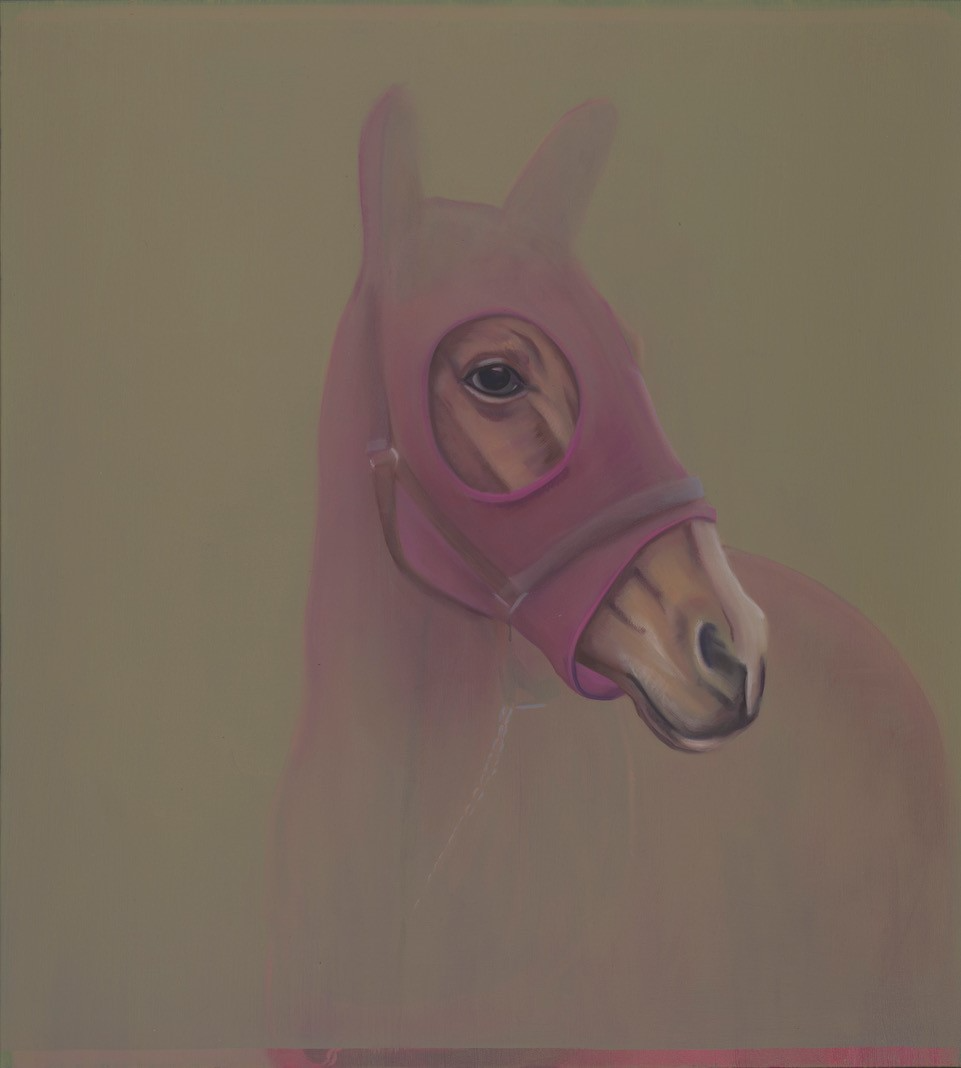
Everything takes place on the surface of the canvas: the horse’s gaze, the candlelight, the gleam of metals, the folds of fabric with their thematic revelations, the sculptural quality of objects’ surfaces. All of these are aesthetic qualities that emerge through the sculpting of paint.
The act of painting captures, on a flat surface, the moisture of the eye, the texture of fabrics, the skin of animals and plants, and every distinct material quality through chromatic nuances and the luminosity of reflections.
Often, the realistic rendering of elements within the narrative conflicts with the cancellation of illusion produced by the flat, almost monochromatic background. This is an apparent contradiction that primarily concerns questions of interpretation, as well as the questioning of truth within the image, where metaphor, allegory, and a multitude of associations play a fundamental role. Moreover, the artist’s intentions and the disposition of their gaze are conveyed through painting, giving rise to subtle suggestions.
It would not be unreasonable to suggest that, despite the recognisable narrative elements and the visual richness offered by a wealth of recollections—as quotations or fragments from well-known and iconic works in art history are incorporated into the composition—the viewer ultimately finds themselves confronted with the silence of the canvas.
Nevertheless, a critical approach to the history of images undoubtedly reveals how our relationship with beauty and truth changes in the contemporary era, within a framework that encompasses both the reading of images from the past and the ways in which their enchantment is dispelled today.
In any case, certain enduring questions concerning the artistic process always relate to the limits of the painted surface within its two-dimensional nature, to virtuosity and the play of optical illusion, as well as to thematic ambiguities.
Vasilis Zografos succeeds in bringing all these elements together, creating a form of thoroughly conceptual painting, in which each work constitutes an act of reflection on the very limits of the concept of representation.
In his book Camera Lucida (La Chambre claire, 1980), Roland Barthes introduces the concept of punctum to describe the profound, personal, and subjective relationship that a viewer develops with a photograph. It is that element the viewer does not actively seek, yet which captures their attention, takes them by surprise, and holds their gaze. Extending the concept of punctum to the painted image, we might describe it as that something which moves the viewer emotionally rather than rationally: a detail—texture, brushstroke, luminosity, an unexpected angle, or an apparent imperfection—that can hold them spellbound on a personal, unconscious level. It may also be an element that draws the viewer into an unexpected narrative, capable of generating emotional intensity and entirely transforming an established interpretation of the work, beyond the painter’s original intention.
It is worth allowing the horse’s gaze to awaken our own way of seeing, so that we may then appreciate the ambiguity of painting and the visual tactility* in Zografos’s works. And, as the exhibition’s title, Your Success Will Astonish Everyone, ironically suggests, this too is an achievement—a feat capable of astonishing anyone.
*Visual tactility transforms the painted surface from a field of representation into a field of sensory experience. The gaze is no longer confined to recognising forms but wanders across the material, seeking texture, resistance, density, and traces of gesture. Painting thus becomes a space where vision meets touch and the image acquires the physical presence of an object.
Upcoming Exhibition
Opening Thursday 3rd of December 2026, 18.00 – 21.30
.jpg.png)
George Xenos
Pollination
in Nature and Art
PRESS RELEASE
One of Nature’s subtle yet fundamental processes is pollination, which serves as a model for analogous processes within society, human relationships and art.
Pollination is a prerequisite for creation. It is a delicate process that ultimately bears fruit, flourishing in Nature and inspiring Art.
Within the extraordinary breadth of Giorgos Xenos’s artistic interests and the wide spectrum of his subject matter, the series of apples undoubtedly occupies a prominent place. As early as 1980, while living and working in Paris, and later in Berlin, continuing to this day in Athens, Giorgos Xenos responded to the challenge of this magnificent form, reinterpreting it through an act of creative re-creation.
As an authentic creator who consistently chooses to work through geometry, he approaches the apples according to the same geometric principle, accentuating their volume without overlooking their fleshy nature. At the same time, he seeks, as the case may be, to enclose them within a visible outline or to shape them around an invisible internal structural framework, allowing them the freedom to express their own expressionist character.
He preserves their elegance and individuality, conveying not only their natural qualities but also their poetic dimension and mythological significance, through collective portraits endowed with individual characteristics.
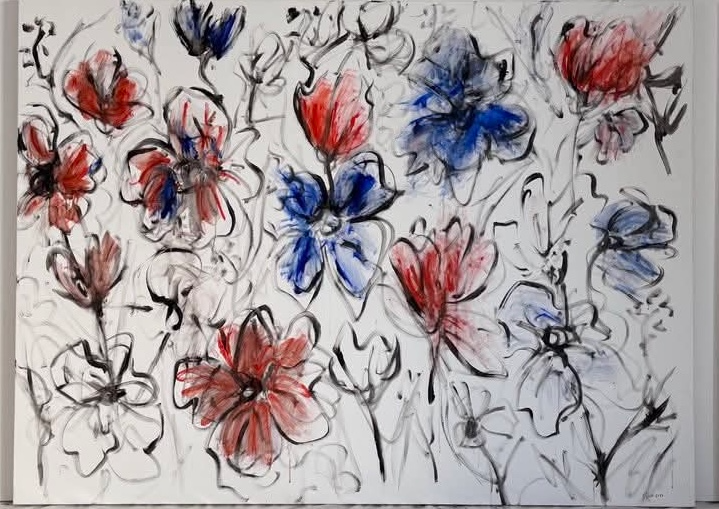
Working with bold, expressive lines and employing acrylics, watercolours, ink, clay and wire, he seems to be unconsciously pursuing a sculptural form, one that brings together, in harmonious coexistence, the demands of sculpture and the sensuous richness of painting, in which colour is drawing, according to the Pre-Socratic philosophers.
Like all his works, the sculptural apples of Giorgos Xenos are truly unique. Each is handmade and individually modelled, one by one. Their metallic sheen reveals the inner radiance of a divine fruit, while reflecting the viewer’s delight.
At the same time, their three-dimensional formal and sculptural articulation transforms their relationship with space, asserting a dynamic presence within the whole, in the complex creative encounter between Nature and Art.
A harvest yet to come.
Thus, Giorgos Xenos never ceases to surprise us, as he does with this present exhibition and its distinctive title.
George Xenos is secretly restless. That’s what I like about him, and it makes me think. That’s what draws me in.
He knows how to transform fruits and incorporate them into his imagination without losing their essence.
Forms—formes—amid the vertigo of the verb “to be.” Perhaps I have vision. Yet I am nearly blind. Is music necessary? Certainly. It is acuteness. Through visual media, I contemplate even radioactive terror in the morphological modes of whatever madness the artist may possess.
As Rimbaud wrote: il faut être absolument moderne. Something returns to my hearing, but what is it? And—and—and. We seek a face. Vacuum amoris…
And let’s call this, right now, aeternitas!
N. Karouzos
September 10, 1986.
Excerpt from a text by the poet Nikos Karouzos about Giorgos Xenos.
 your business playground